Switch perspective
VTS — VIEW THE SPACE

What if six acquired products — built by different teams in different design languages — could finally feel like one commercial real estate operating system?

What if six acquired products — each with their own P&L, roadmap, and squad — could finally operate as one platform with one product strategy?

DESIGN SYSTEM (TERRA) DESIGN OPERATIONS & GOVERNANCE INFORMATION ARCHITECTURE CROSS-FUNCTIONAL LEADERSHIP PLATFORM STRATEGY
PLATFORM PRODUCT STRATEGY MULTI-PRODUCT INTEGRATION & ROADMAP ORG & OPERATING MODEL TRANSFORMATION CROSS-FUNCTIONAL LEADERSHIP (6 SQUADS) CUSTOMER DISCOVERY & MENTAL-MODEL PIVOT
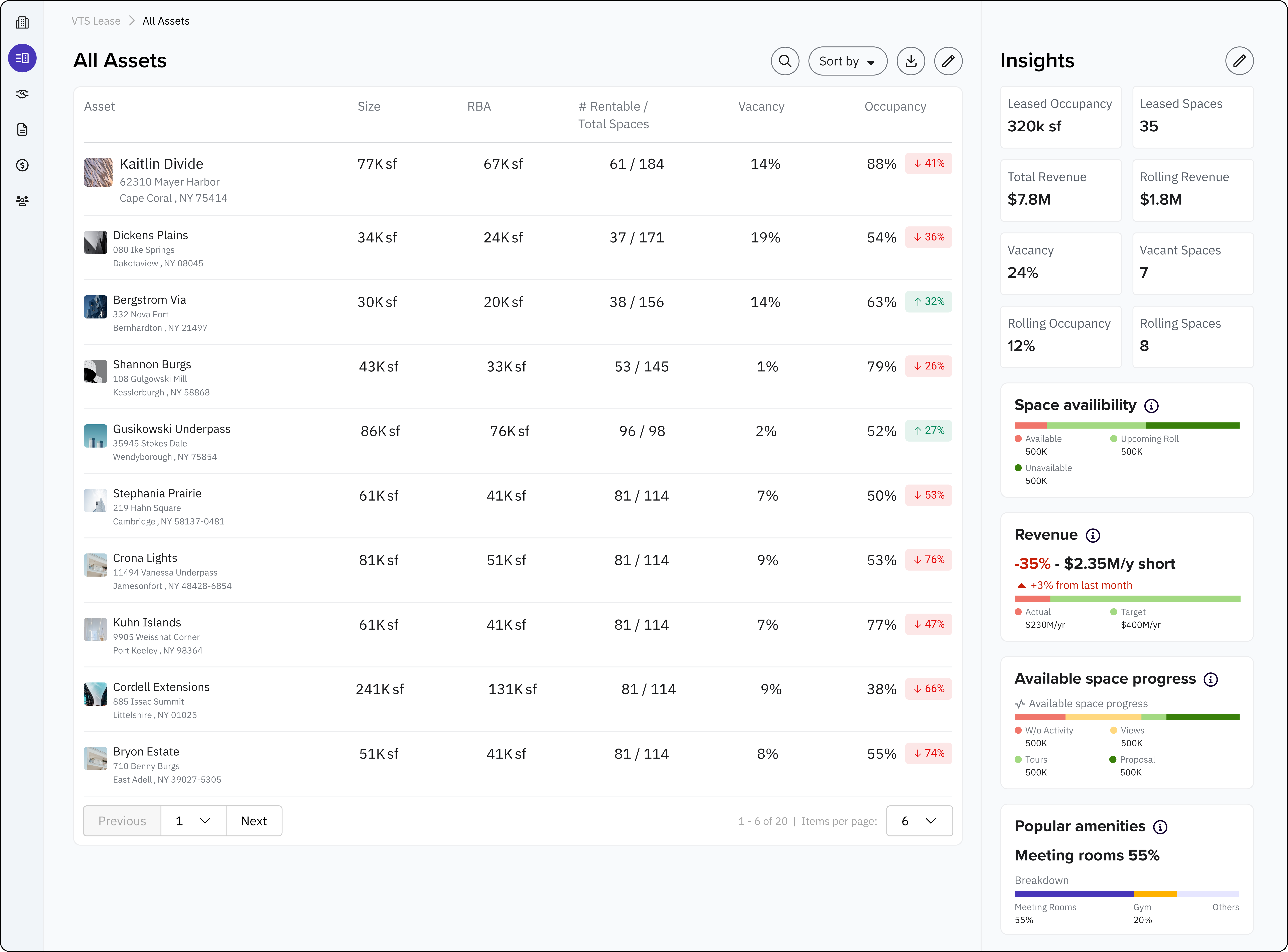
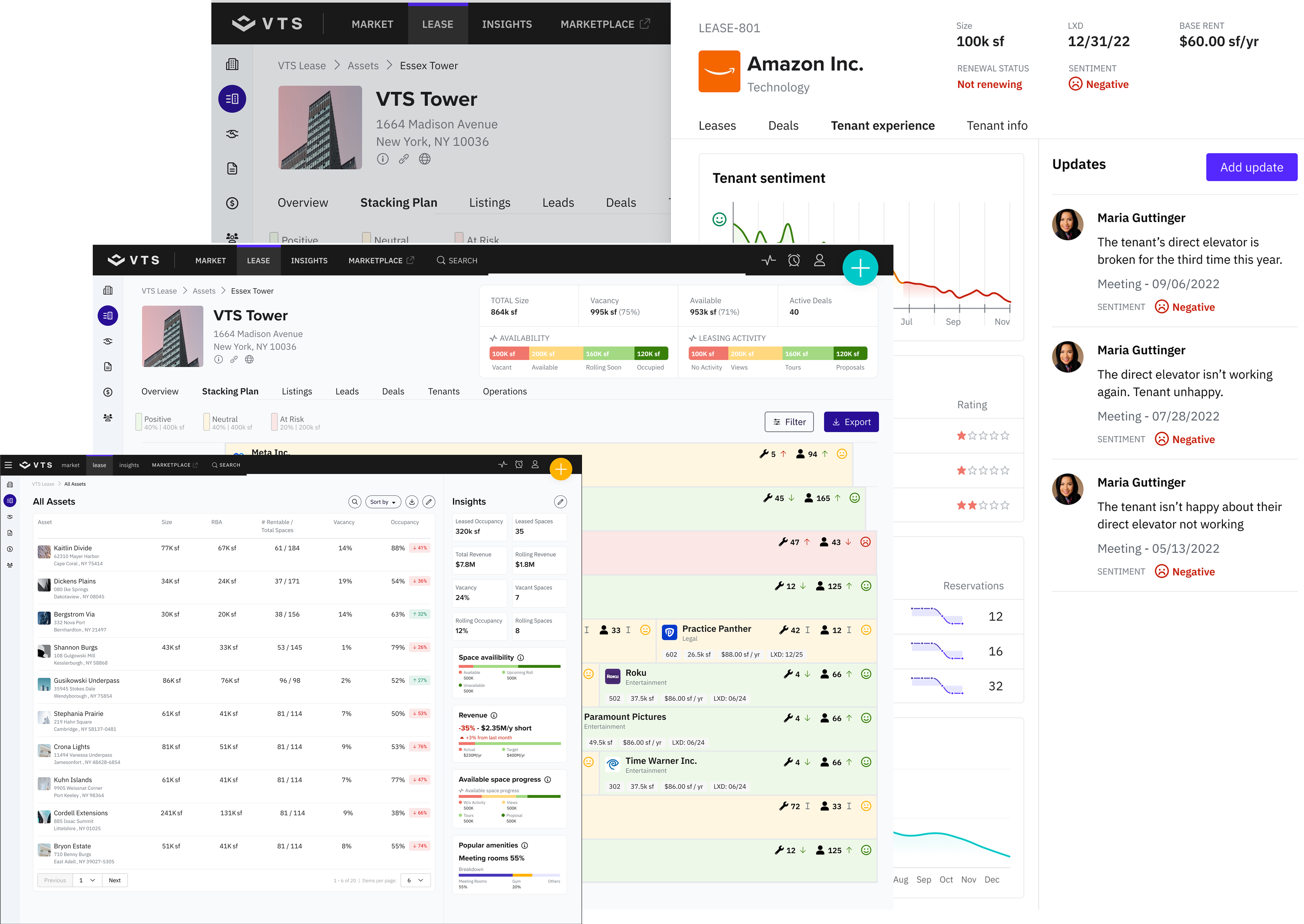
The new unified VTS CRE OS dashboard

VTS

Turning six disconnected products into one CRE operating system at View The Space. 700 components reduced to 160. 90 categorical color options reduced to 4. Level-1 navigation cut by 7×. A new design system, a new operating model, and a new architecture that finally delivered on the "one platform" promise.

Owned the platform strategy that turned six acquired CRE products into one operating system. 700 components consolidated to 160. 7× reduction in navigation complexity. Restructured the operating model across six product squads — and finally delivered on the "one platform" promise customers had been told about for years.

ORIGIN

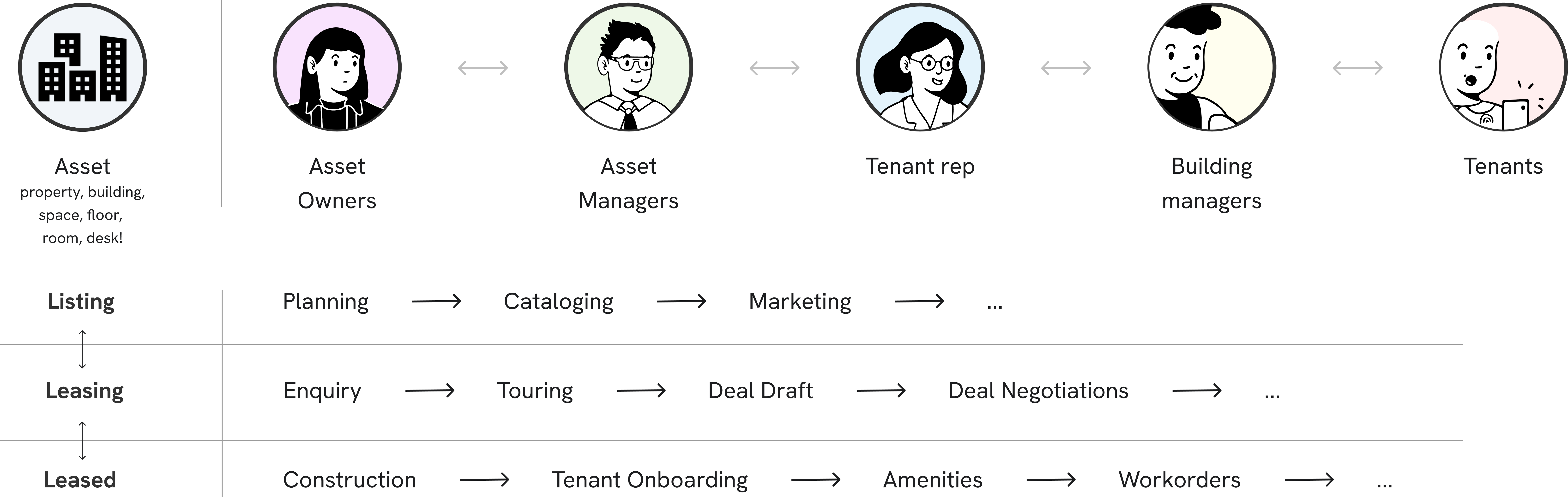
VTS is the technology backbone of commercial real estate — used by asset owners, asset managers, tenant reps, building managers, and tenants to eliminate manual processes and leverage real-time portfolio data.

By 2021, VTS had grown by acquiring multiple products — Wave, Lane, Marketplace, Rise, Marketing, and Sandbox — each with its own teams, design language, and components. The promise to customers was "one platform." The reality was six.

PROBLEM SOLVED

I led the design transformation in three sequenced phases — design system first, then design operations, then product architecture — each enabling the next. The promise to customers, finally delivered.

PHASE 01 · UX
Terra Design System
PHASE 02 · OPS
Platform Experience House
PHASE 03 · PRODUCT
Unified CRE OS
MY ROLE
Design Manager &Platform Lead
TEAM
6 product squads+ engineering, research, content
TIMELINE
Oct 2021 — May 2023~ 1 year 8 months
OUTCOMES
700 → 160 components7× less L1 navigation
-77%
Components consolidated
From 700 across 6 libraries to 160 unified components.
2–4×
Adoption vs. legacy
Adoption of Terra over the legacy design system.
AA
WCAG 2.0 compliance
Across the entire new component library.
CONTEXT

VTS is the modern commercial real estate platform.

One promise. Six different products underneath it.

VTS had grown by acquisition. Customers were told they were buying "one platform." Internally, six product squads — Wave, Lane, Marketplace, Rise, Marketing, Sandbox — were each shipping their own design system, their own UI patterns, their own everything.

CRE personas chain
CRE personas chain — Asset Owners → Managers → Tenant Reps → Building Managers → Tenants — over the lifecycle (Planning → Cataloging → Marketing → Touring → Deal → Construction → Tenant Onboarding → Workorders).
FROM A VTS CUSTOMER

"The interface was clunky, and navigation was impossible."

FROM ANOTHER VTS CUSTOMER

"You guys know how to acquire a company — but then it stops. You don't do anything to integrate them."

PHASE 01 · UX FOUNDATION

Terra Design System — six libraries, one source of truth.

THE AUDIT

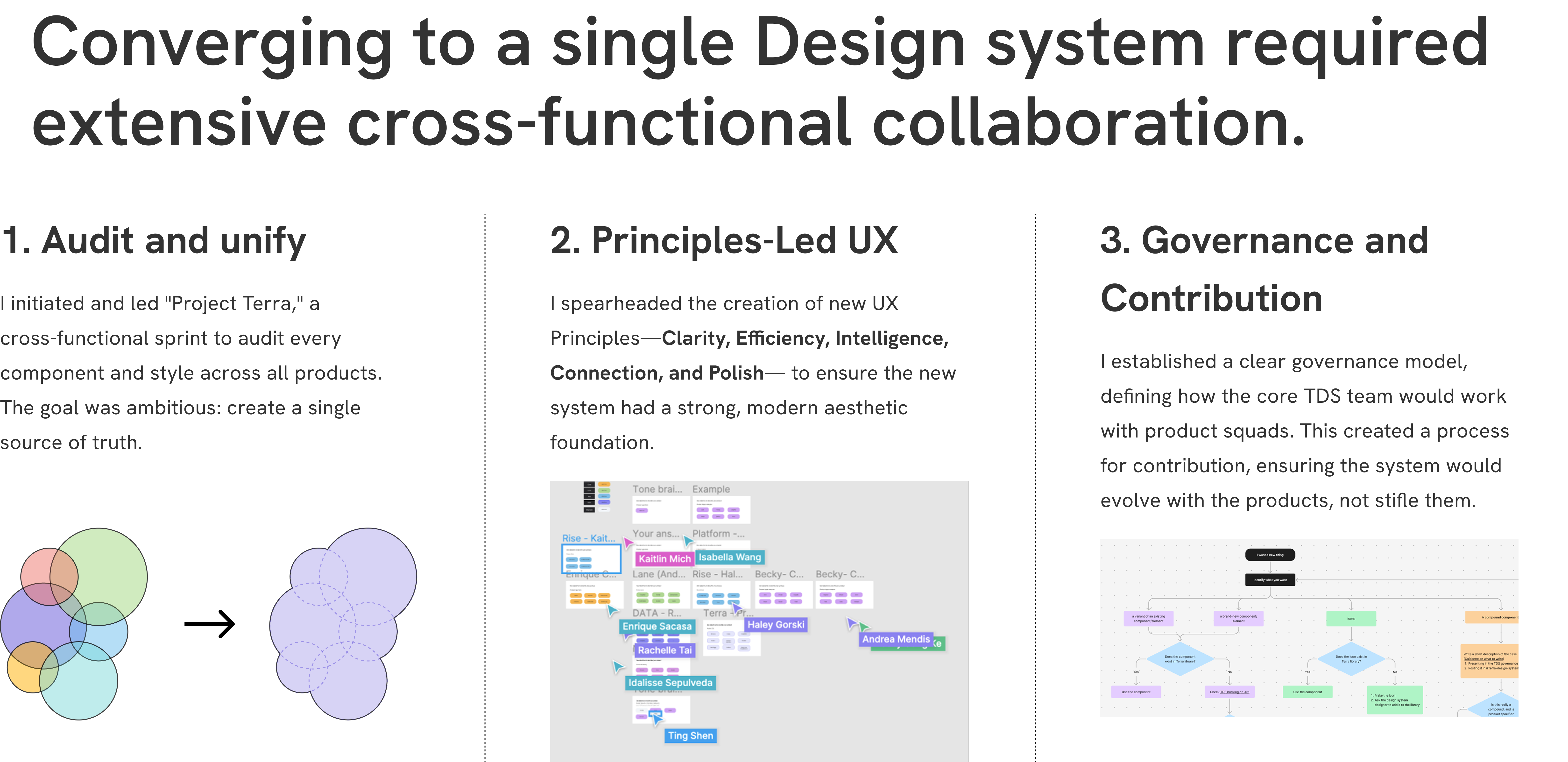
An audit revealed 700 components and 300 styles spread across 6 separate libraries — 75% redundancy, 1/6 efficiency. Designers were rebuilding the same button six times. Project Terra consolidated everything into a single, governed system.

Three moves to unify the system.

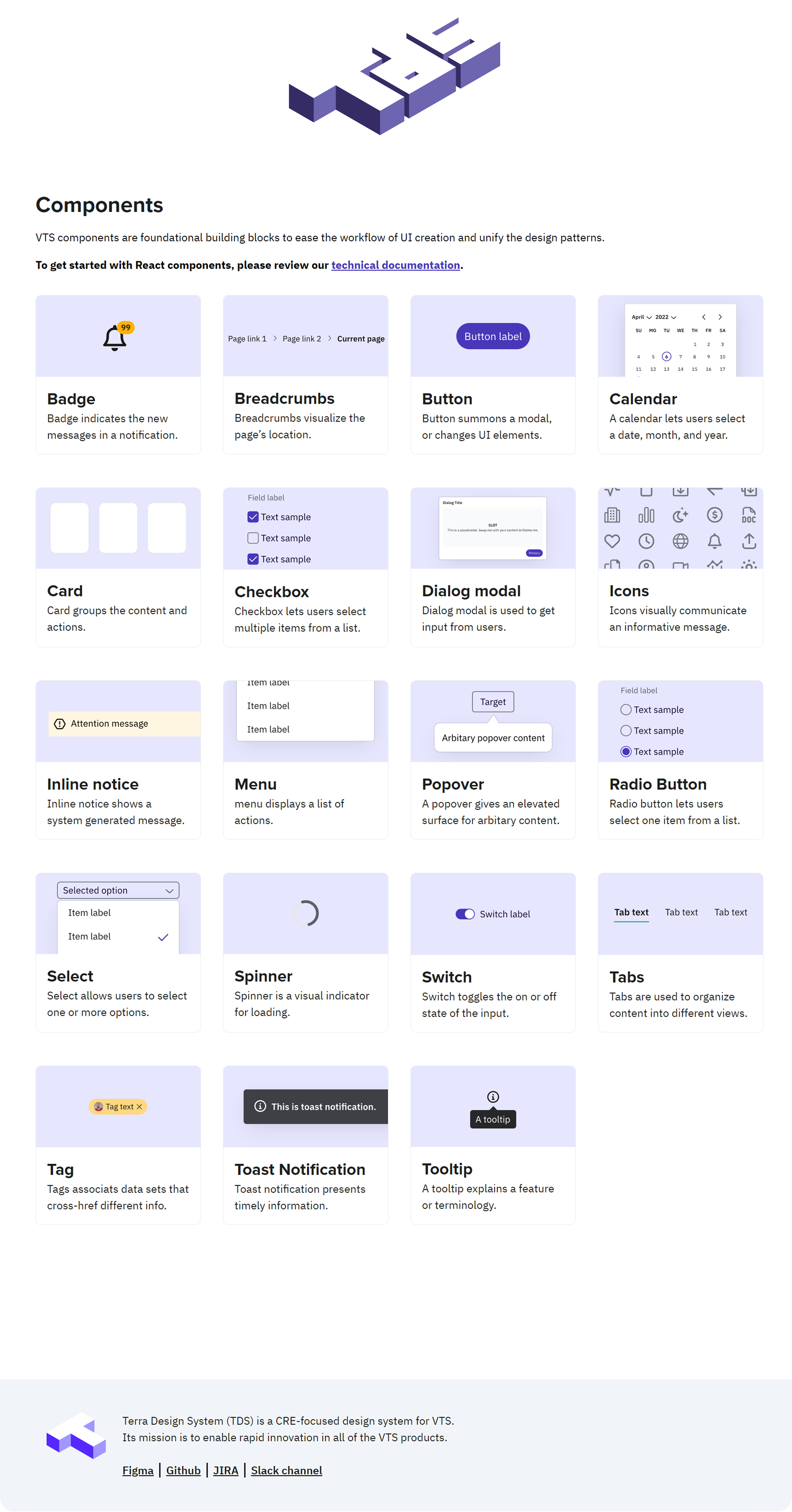
Terra Design System
Terra.vts.com landing showing the design system in production.

90 categorical color options → 4 intentional choices.

Instead of designers picking from dozens of overlapping palettes, the new system gave them 4 semantic decisions — Primary, Subdued, Critical, Success. Pre-defined consistency. No more "which red?"

BEFORE

90 categorical options across 9 hue scales.

Every designer made a different choice. Brand "indigo" appeared in 6 different shades depending on which product squad shipped it.

AFTER

4 semantic roles. Text · Border · Background · CTA.

Designers chose intent ("critical"), not value ("red-600"). The system enforced the right hue. WCAG AA contrast guaranteed.

Process of converging the design system across all products.
PHASE 02 · DESIGN OPERATIONS

Platform Experience House — same job, five different searches.

THE INSIGHT

Every squad had built its own search experience — "search tenants" in one product, "search deals" in another, "search buildings," "search work orders," "search amenities." Identical interaction patterns. Five different UIs.

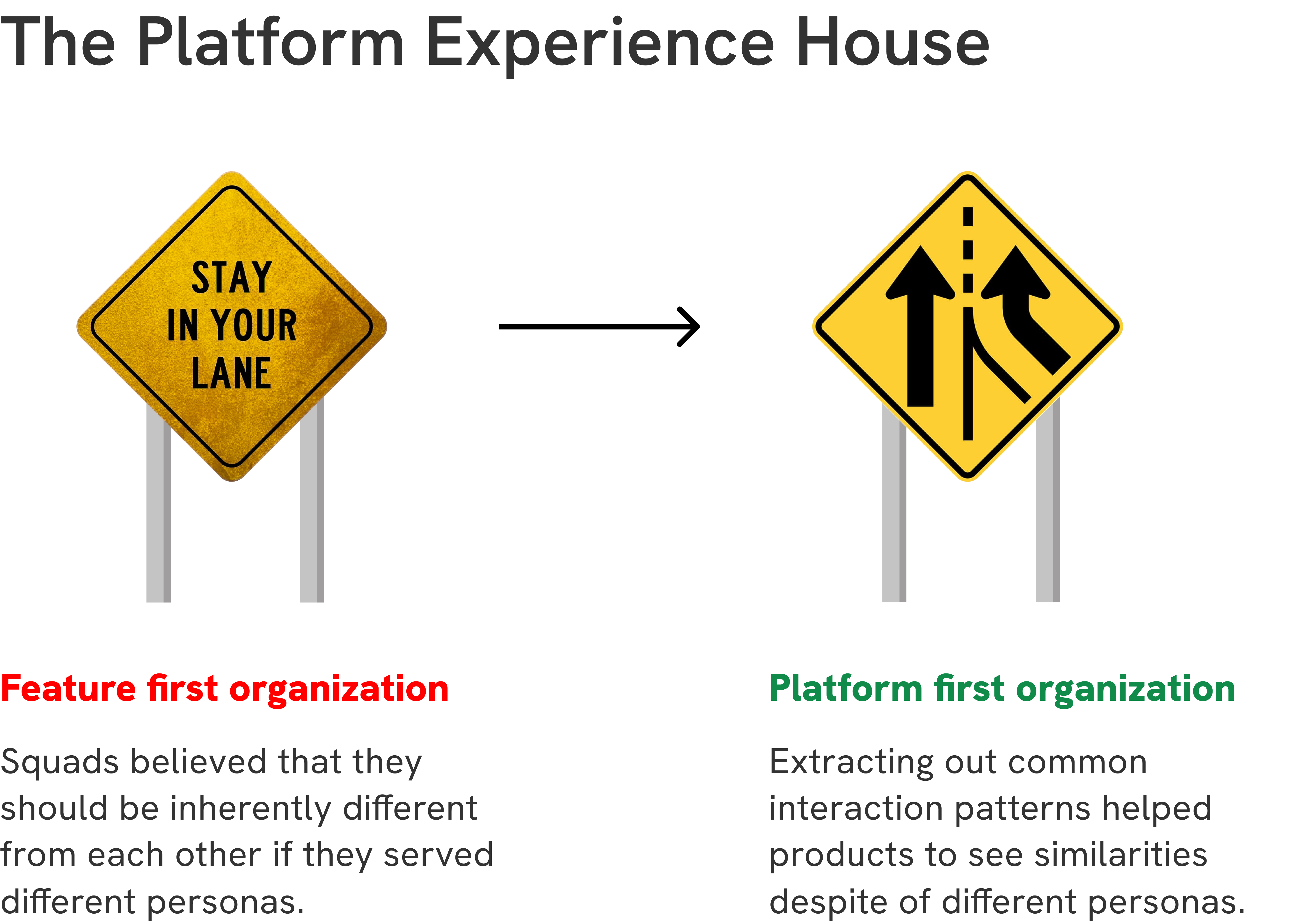
Feature-first organization vs Platform-first organization
Feature-first organization vs Platform-first organization, with the common interaction patterns extracted.

Build a center of excellence — without freezing the squads.

PHASE 03 · PRODUCT ARCHITECTURE

Unified CRE OS — from "I'll just use Excel" to a real platform.

THE MOMENT

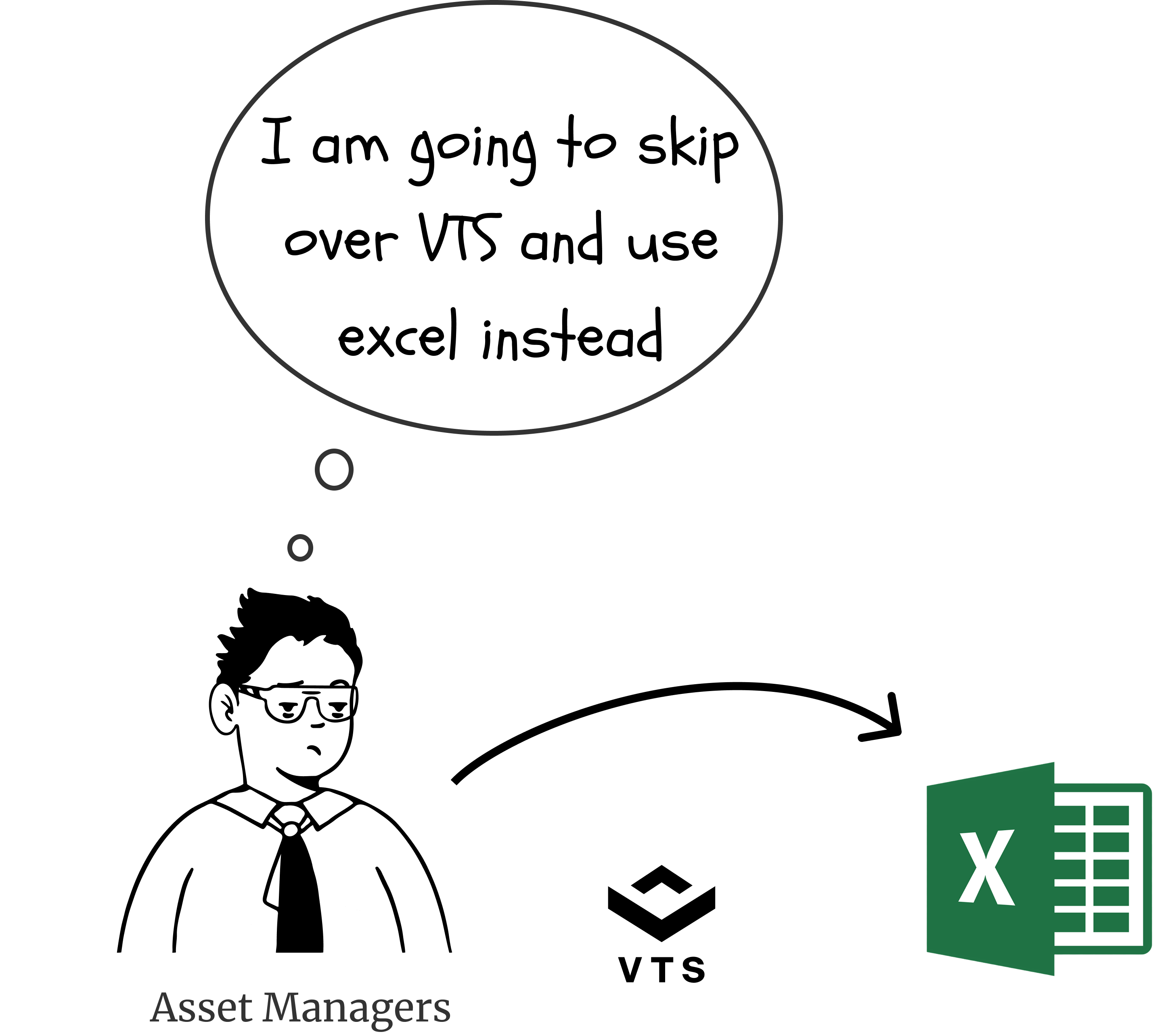
A user we interviewed told us flatly: "I am going to skip over VTS and use Excel instead. How do I make a decision for my property?" That was the moment. The product architecture was working against the user's mental model.

User leaving the platform to use Excel
The moment we realized users were leaving the platform to do their core job.

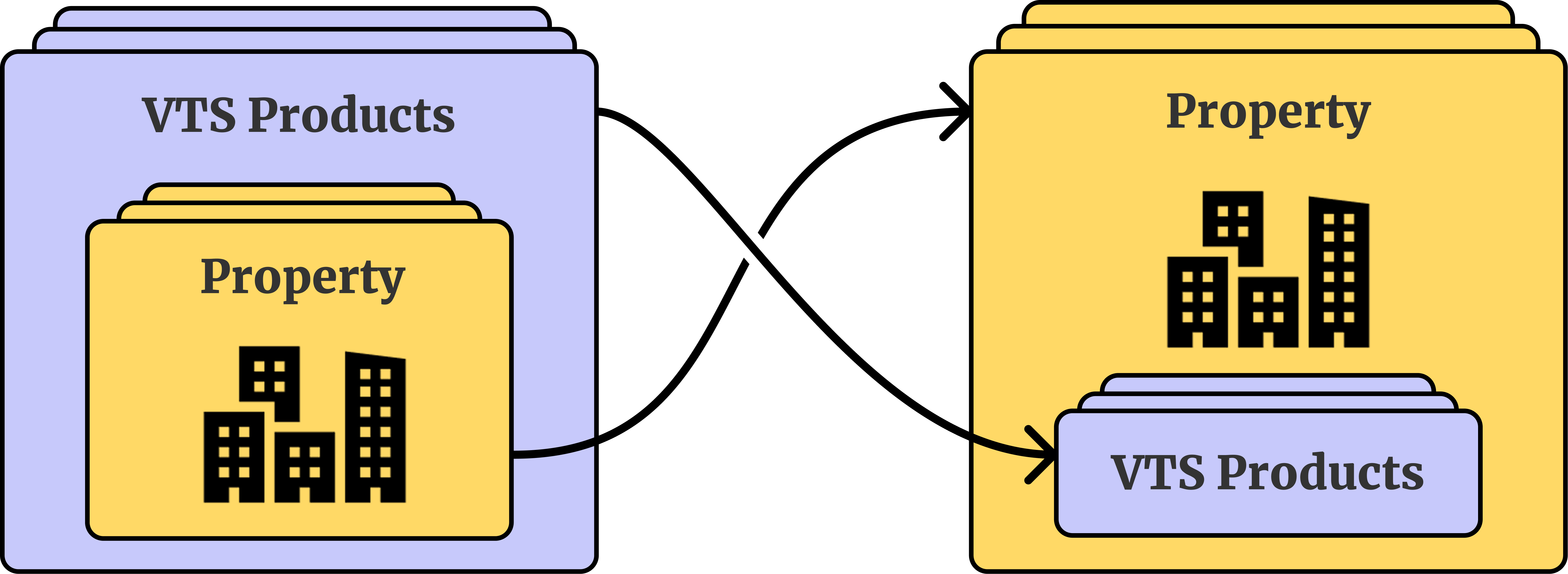
Mental model vs. UI model — the mismatch was the entire problem.

Users think about objects — assets, tenants, deals. The UI was organized around products — Wave, Lane, Marketplace, Rise. The mismatch made every workflow harder than it needed to be.

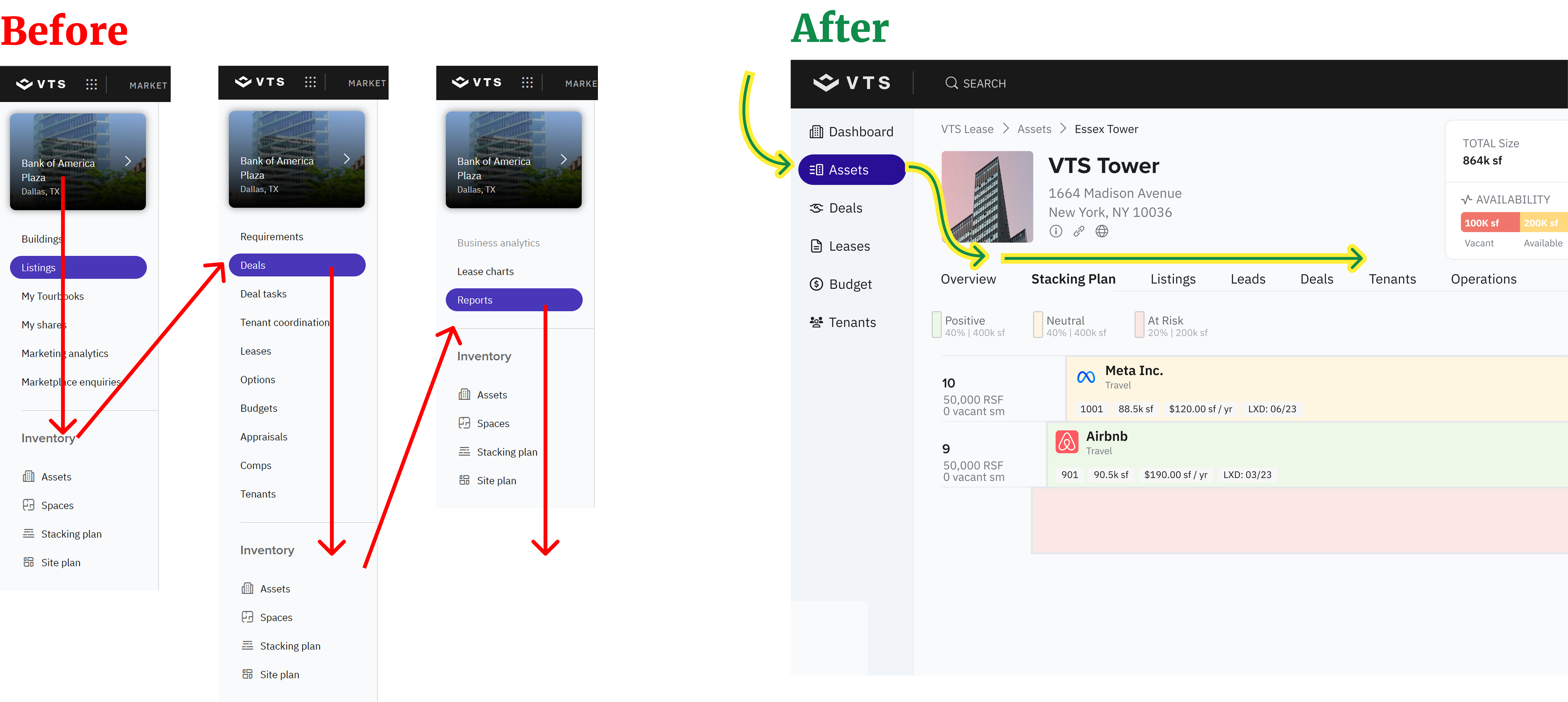
BEFORE · UI MODEL

Product-based navigation.

Open Wave to see leases. Open Lane to see tenants. Open Marketplace to see listings. The user had to know which product owned which data.

AFTER · MENTAL MODEL

Object-based navigation: Assets, Tenants, Deals.

The user thinks in objects. The UI now does too. All the data about a single asset — from any product — surfaces in one place.

The aha moment
VTS Products → Property inside-out architecture — The AHA-moment!

Three principles guided the rebuild.

The new dashboard
The new dashboard — the asset insights view with Space availability, Revenue, Popular amenities, and the cross-platform data summary.

Phase 3 — Headline Outcomes.

Less L1 navigation
Reduction in top-level navigation complexity.
3
Max levels to any insight
Three clicks to anything in the platform.
-50%
Screen complexity
Across the new unified platform views.
The new dashboard
The Aha moment implemented and in action.
REFLECTIONS

What I carry forward.

NEXT CASE STUDY →

JPMorgan Chase — Making a design system loveable for 200 designers.

VIEW CASE STUDY →