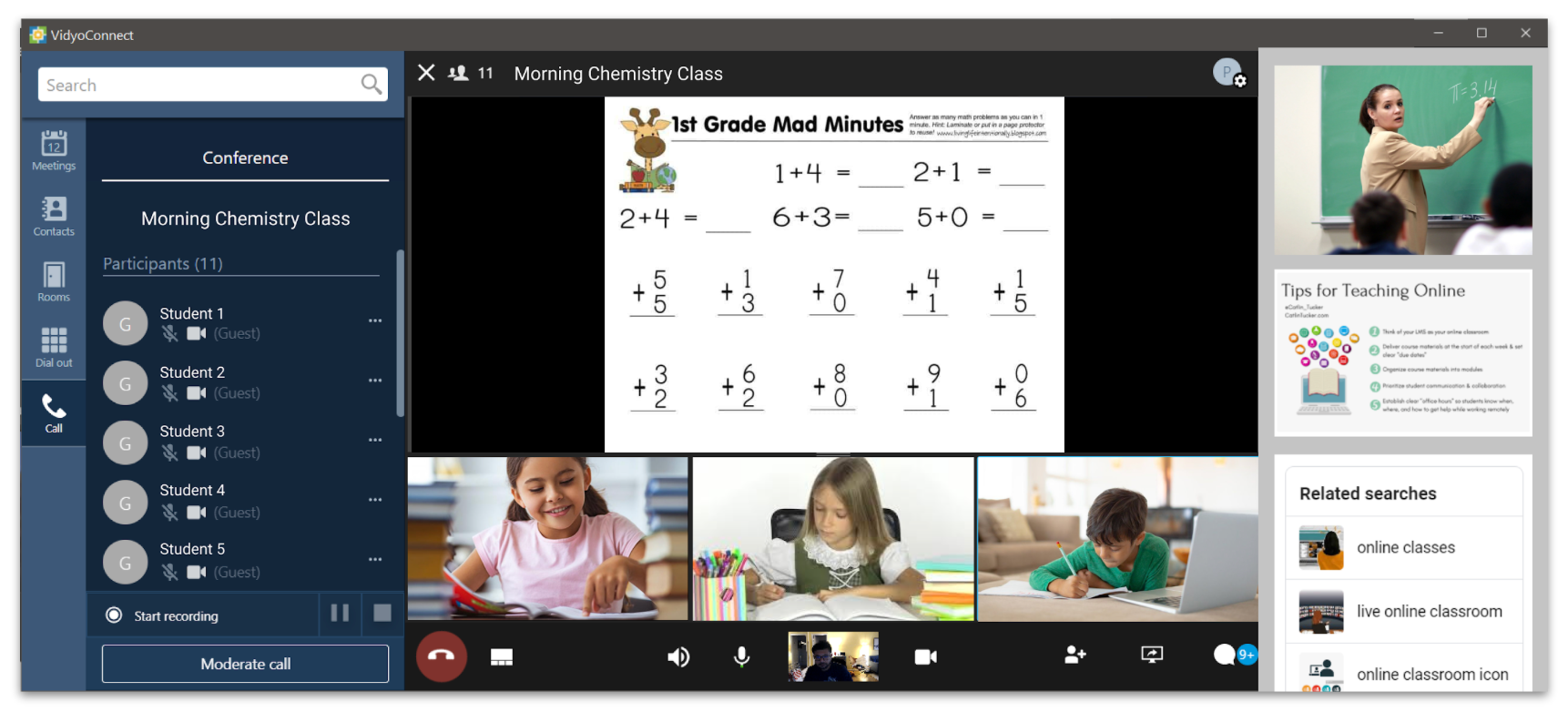
A flexible platform isn't a UX problem alone. It's a blend of design thinking and cutting-edge engineering — three legs of the stool had to be built in parallel.
PILLAR 01 · UI
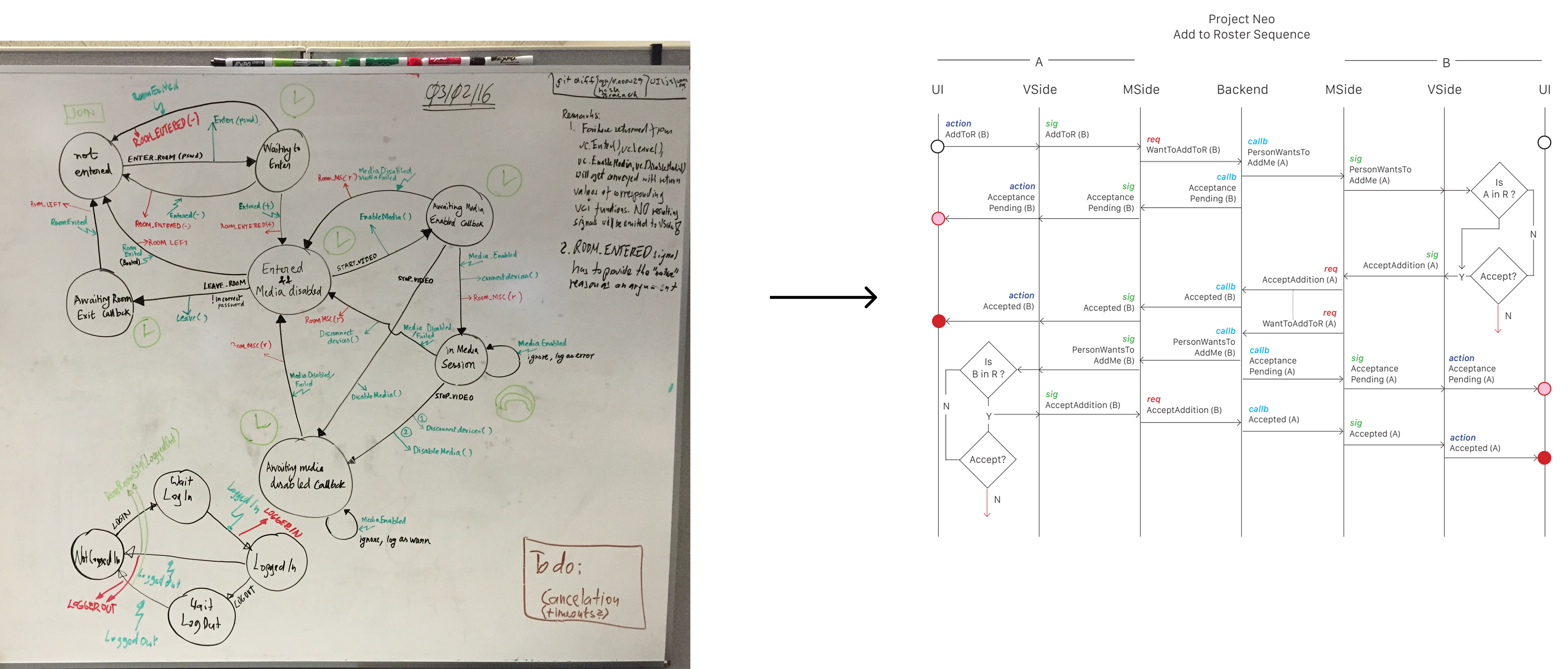
A custom UI framework. Built MV2C — an Elm-MVC-inspired vanilla JS framework — so the platform could be customized fast without losing performance.
PILLAR 02 · API
Micro-event APIs. Worked with the backend team to expose micro-events — granular signals from each video session that the UI could react to.
PILLAR 03 · PHYSICS
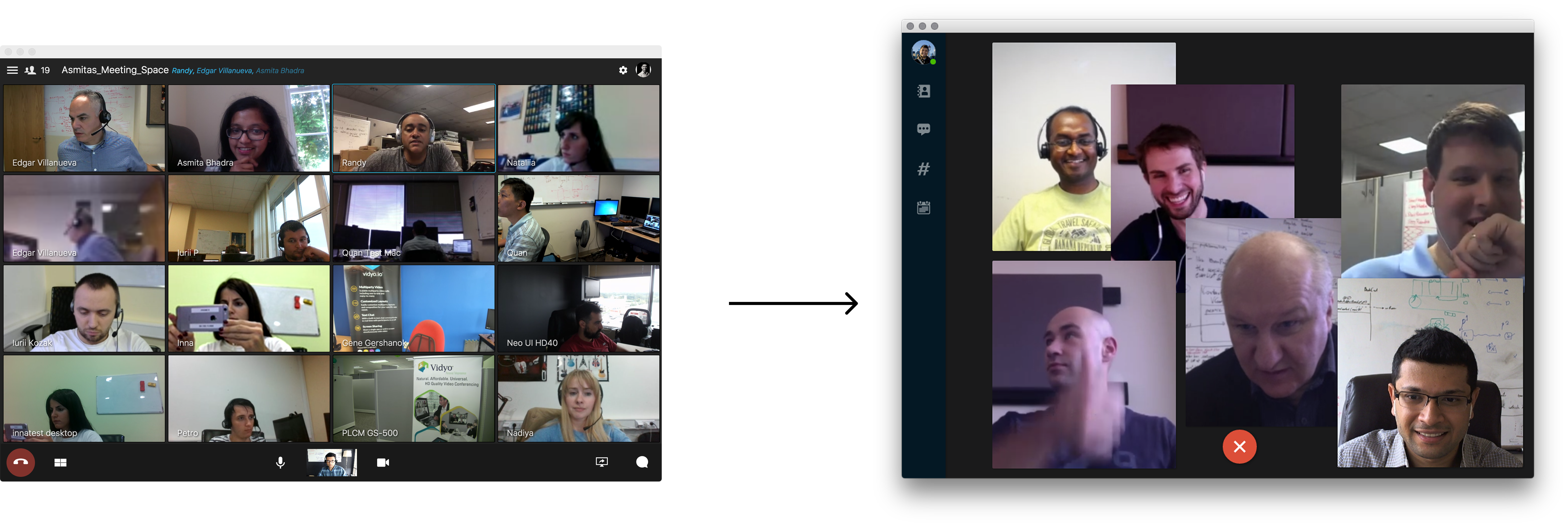
Client-side video composition. Partnered with video rendering scientists to fine-tune Chromium and split a composite video into individual streams on the client.
PILLAR 01 · DEEP DIVE
MV2C — The UI framework I built.
For lack of a better name: Elm's MVC framework on double duty. A super-fast virtual-DOM-ish vanilla JavaScript framework designed for highly customizable real-time interfaces — reactive state, two-brain architecture, and scrappy enough to ship.
Reactive state machine
Model Controller + UI Controller
Scrappy and fast
Vanilla JS, zero dependencies
PS — obviously a single-threaded prototypal JS framework, so it's slower than Elm's lower-level code. The tradeoff: zero dependencies, zero build chain, ships anywhere a customer's browser runs.
MV2C framework diagram — the two-brain Model Controller / UI Controller schematic.
Micro-events made the UI smart.
To support nuanced customer workflows, I needed granular signals out of the video session — bandwidth changes, participant focus shifts, screen share state, network drops. The backend had never exposed this granularity before. For the first time, they built APIs around exposing micro-events.
Splitting one video stream into many — on the client.
The flexible video streams
The legacy server pre-composed all participants into a single video tile. Customers couldn't rearrange, prioritize, or restyle individual participants. I partnered with the video rendering team to fine-tune Chromium to split one composite video into individual streams, opening the door to truly customizable layouts.