Switch perspective
BLUE BOOK SERVICES

What if a 124-year-old credit intelligence platform — built when phones didn't exist — could become the AI runtime that watches the produce industry for you?

What if a 124-year-old credit intelligence platform — with plateaued growth and stale pricing — could become a multi-million-dollar AI product line?

UX STRATEGY & INFORMATION ARCHITECTURE BRAND & VISUAL IDENTITY .NET → REACT TECH MIGRATION ACQUISITION FUNNEL DESIGN AI PRODUCT VISION
PRODUCT STRATEGY & VISION PRICING STRATEGY & PLAN CONSOLIDATION (9 → 3) CUSTOMER RESEARCH & PERSONA MODELING CONVERSION FUNNEL & GROWTH ($420K ARR) AI PRODUCT ROADMAP & GTM

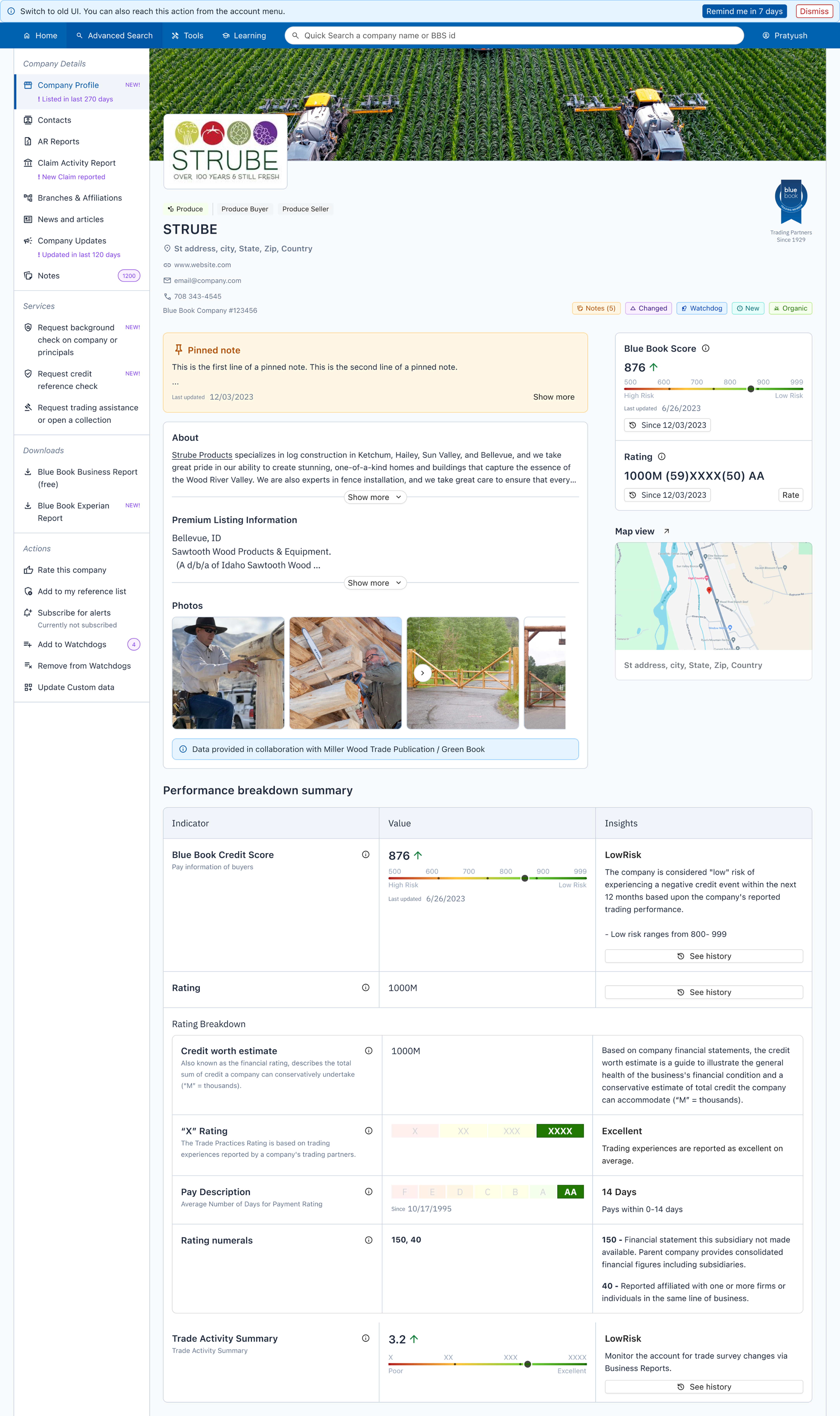
Screenshot of the redesigned Blue Book Services company profile page, showing a modernized UI with a new color palette, typography, and layout. The page features a prominent hero image, a clear value proposition, and easy-to-navigate sections for products, pricing, and resources.
Redesigned Blue Book Services company profile page, showing a modernized UI with a new color palette, typography, and layout

Blue Book Services

Modernizing a 124-year-old market intelligence platform — and proposing what's next. Two case studies shipped: a 30% subscription revenue lift and a new acquisition funnel that generated $420K in its first three months. A third — an AI vision — proposes where the platform should go next.

Owned product strategy across pricing, conversion, modernization, and a proposed AI roadmap. +30% subscription revenue per member at 98% retention. $420K in new ARR in 90 days. Plus a vision for what comes next — a $4B AI-runtime opportunity built on Blue Book's proprietary 124-year trust graph.

ORIGIN

By 2023, Blue Book Services — the trusted source of credit ratings and trade reputation for the produce industry since 1901 — had plateaued. Costly external dev agencies, a legacy .NET stack, declining customer satisfaction, and stagnant acquisition were holding back innovation while competition caught up.

PROBLEM SOLVED

For existing customers: the platform was outdated, hard to use, and the Blue Book Score itself was unreadable — 95% of customers used a PDF cheat sheet to interpret it.

For new customers: the marketing site was a static directory split across three domains, drew 842 weekly visitors, and offered no analytics. New visitors couldn't tell what Blue Book did for them in 5 seconds.

HOW IT WORKED

Two delivered case studies — modernization, then acquisition — anchored by a four-pillar framework. A third proposed case study extends the same framework into an AI runtime.

CASE 1
Modernize the platform
CASE 2
Build the acquisition engine
CASE 3 · PROPOSED
AI runtime & agent vision
MY ROLE
Head of UX Design
Reporting to the CEO
TEAM
3 Product Designers
1 Brand Designer · 8 Front-end Devs · New CTO hire
TIMELINE
Jun 2023 — Sep 2025
~ 2 years 4 months
OUTCOMES
+30% revenue / 98% retention
$420K+ in first 3 months · AI vision proposed
+30%
Subscription revenue / member
Consolidated 9 plans into 3 while raising prices 10–50%.
98%
Customer retention
Customers welcomed the price increase. CEO + VP Sales sent thank-you notes.
$420K+
Sales in first 90 days
New acquisition funnel converted 169 paying members.
CONTEXT

The trust layer of the produce industry.

A 124-year-old company at the inflection of three converging forces.

Blue Book Services has been the trusted source of credit ratings, market intelligence, and trade reputation for the produce and lumber industries since 1901. Its Blue Book Score, AR reports, and industry news connect producers, suppliers, distributors, and retailers across the entire supply chain.

By 2023, the business had plateaued. Costly external dev agencies, a legacy .NET tech stack, declining customer satisfaction, and stagnant acquisition were holding back innovation while competition caught up.

Book ecosystem chain illustration — Producers → Suppliers → Supply Chain → Distributors → Buyers / Retail — or a contextual industry photo.
Blue Book sits at the trust layer between every link in the produce supply chain.
BRIEF

"When you are finished changing, you are finished." — Ben Franklin. The mandate when I joined: change everything.

CASE STUDY 1 · DELIVERED · JUN 2023 — MAR 2024

Make customers happier about paying more.

THE BRIEF

Leadership had decided to consolidate 9 confusing membership plans into 3 simpler tiers and raise pricing 10–50%. My job: make the upgraded product feel so much better that customers welcomed the change.

Side-by-side comparison of the old BBOS UI and the new React-based UI. Same view, two eras.

Five problems, surfaced through research.

  • 01
    60% of the app had less than 1% utilization. Most features were ignored. The interface buried what mattered.
  • 02
    50% of searches returned zero results. Filters were misleading; search ranking didn't reflect intent.
  • 03
    The app required customer support to finish a task. Service was acting as a UX patch — expensive and slow.
  • 04
    Server-side .NET rendering was painfully slow. Multi-second loads on every page. Bootstrap 3 had reached EOL in 2019.
  • 05
    95% of customers couldn't read the Blue Book Score. A literal PDF cheat sheet was being passed around to interpret it.

Four focus areas, mapped to four customer needs.

I organized the response into a four-pillar framework — one for each user-facing layer. The same framework would later anchor my AI vision in Case 3.

PILLAR 01
Better Access
PILLAR 02
Better Intelligence
PILLAR 03 / 04
Better UX + Tech
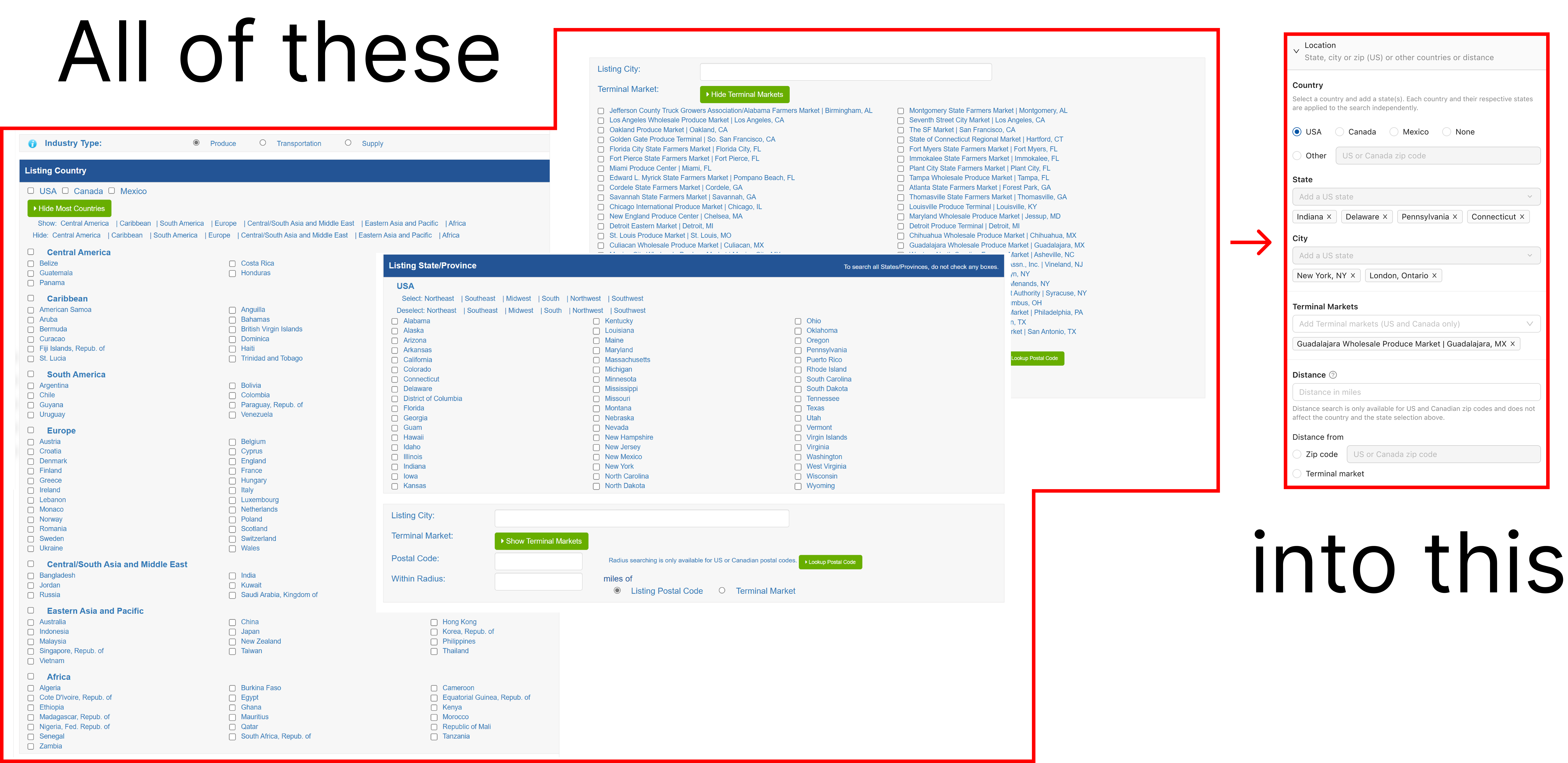
Reduce 3rd level unique navigation from 24 pages to a 3-single page action tool (90% reduction).

The Blue Book Score, finally explained.

BEFORE

One opaque number. A PDF cheat sheet to interpret it.

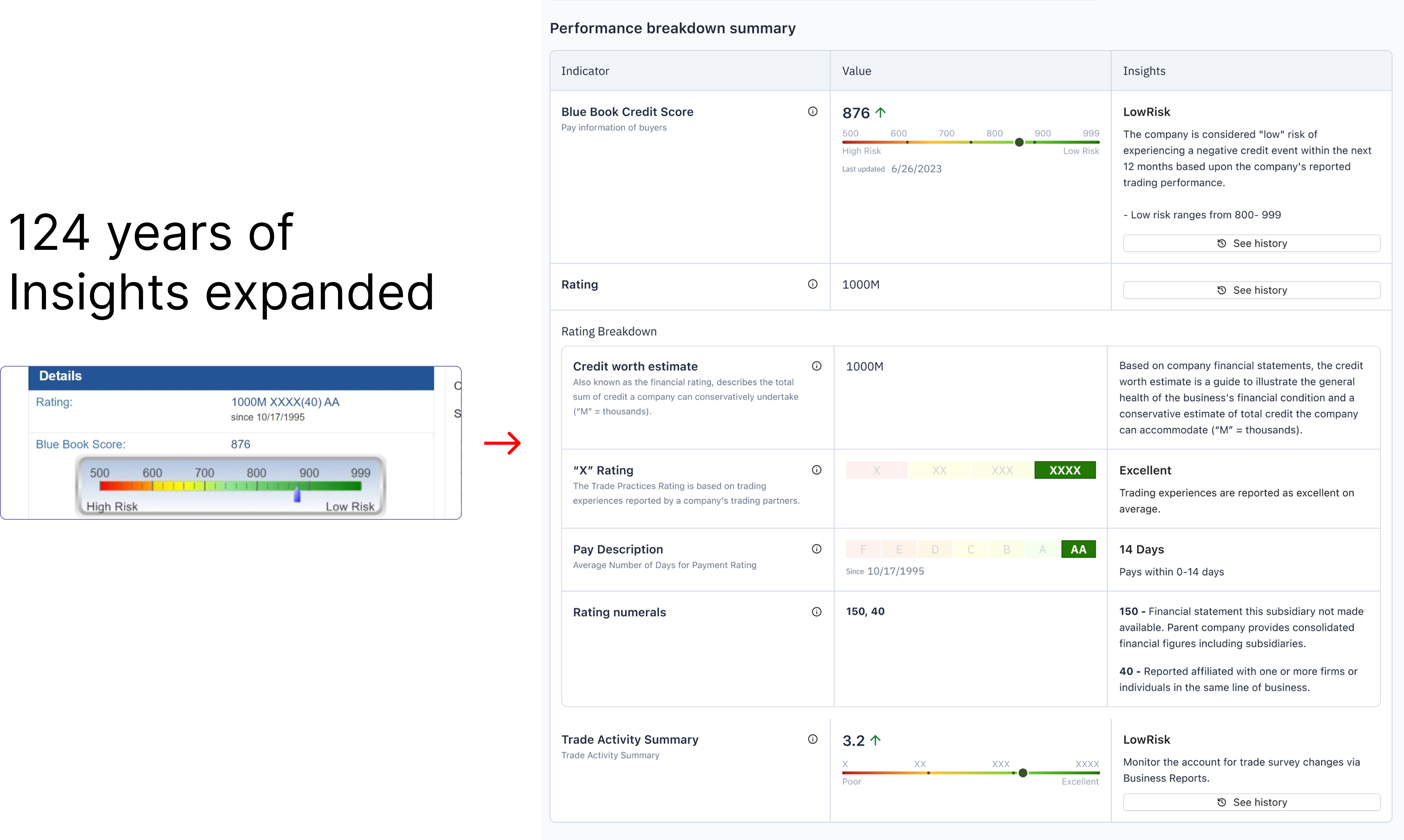
The score was a 4-digit composite with a separate alphanumeric rating. 95% of customers said they didn't understand it. A printed PDF guide was the workaround.

AFTER

Five readable building blocks. AI-generated explanations.

Credit Worth, X Rating, Pay Description, Trade Activity. Each with a value, a visualization, and a one-sentence explanation. The score now explains itself.

Performance breakdown summary — the explained-rating UI
Performance breakdown summary — Expanding the hidden and cryptic rating with fresh insights. This will be dynamic in the stage 3 ... please read further to know more.

Case Study 1 — Headline Outcomes.

+30%
Revenue per member
Subscription revenue lift, 98% retention.
9 → 3
Plans consolidated
From confusing fan to clear three-tier structure.
-66%
Page count
While launching 7 new features.
FROM THE CEO

"Love the new look. Very contemporary and clean. I know what goes into a redesign — it takes time and intention."

CASE STUDY 2 · DELIVERED · JAN 2025 — APR 2025

From static directory to conversion engine.

THE BRIEF

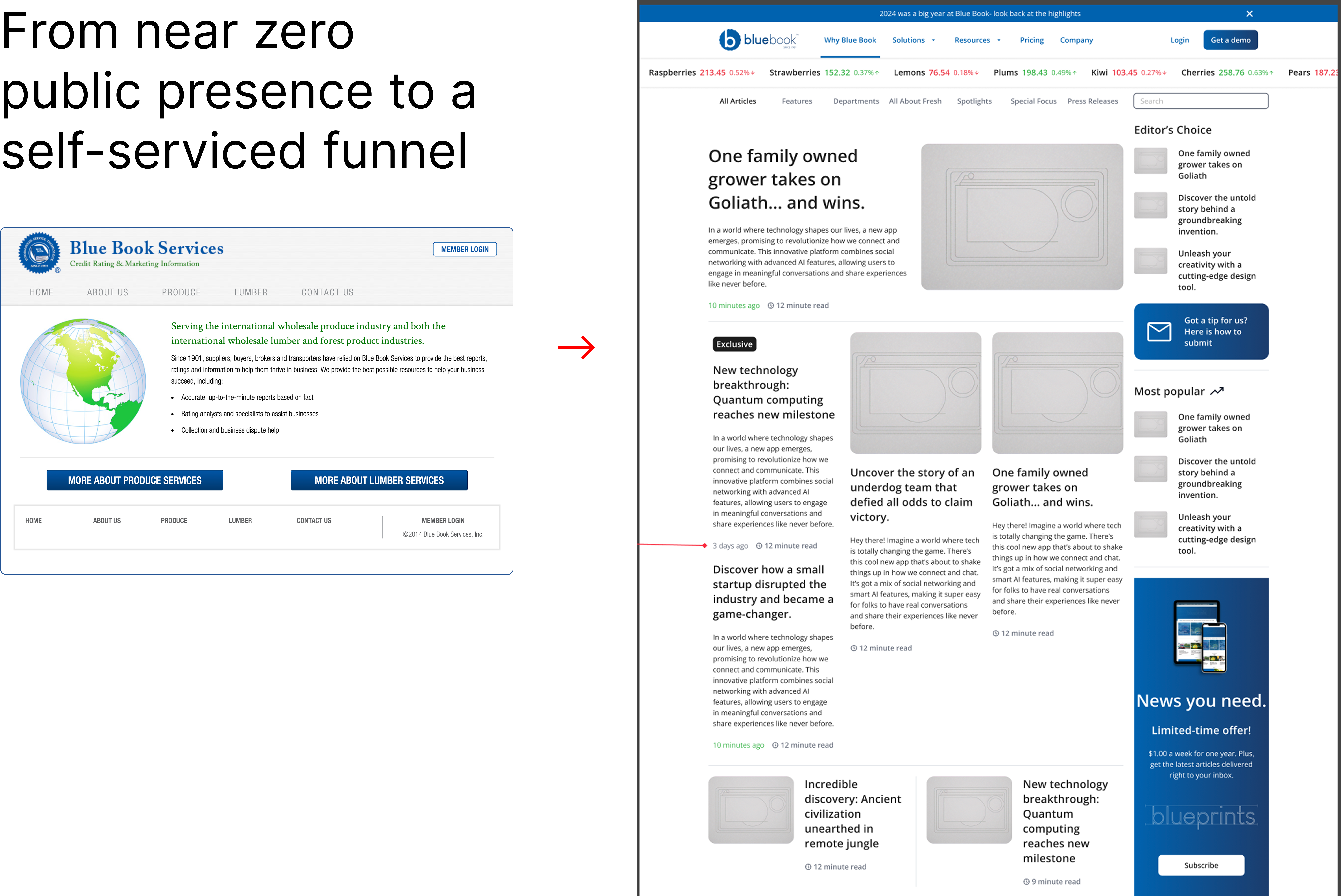
By 2025, existing customers were happy. But Blue Book had no real way to reach new ones — the marketing site was a static directory split across three domains, drew 842 weekly visitors, and offered no analytics.

The new public homepage you launched, that consolidated 3 websites into one and created a self serviced funnel for new subcribers.

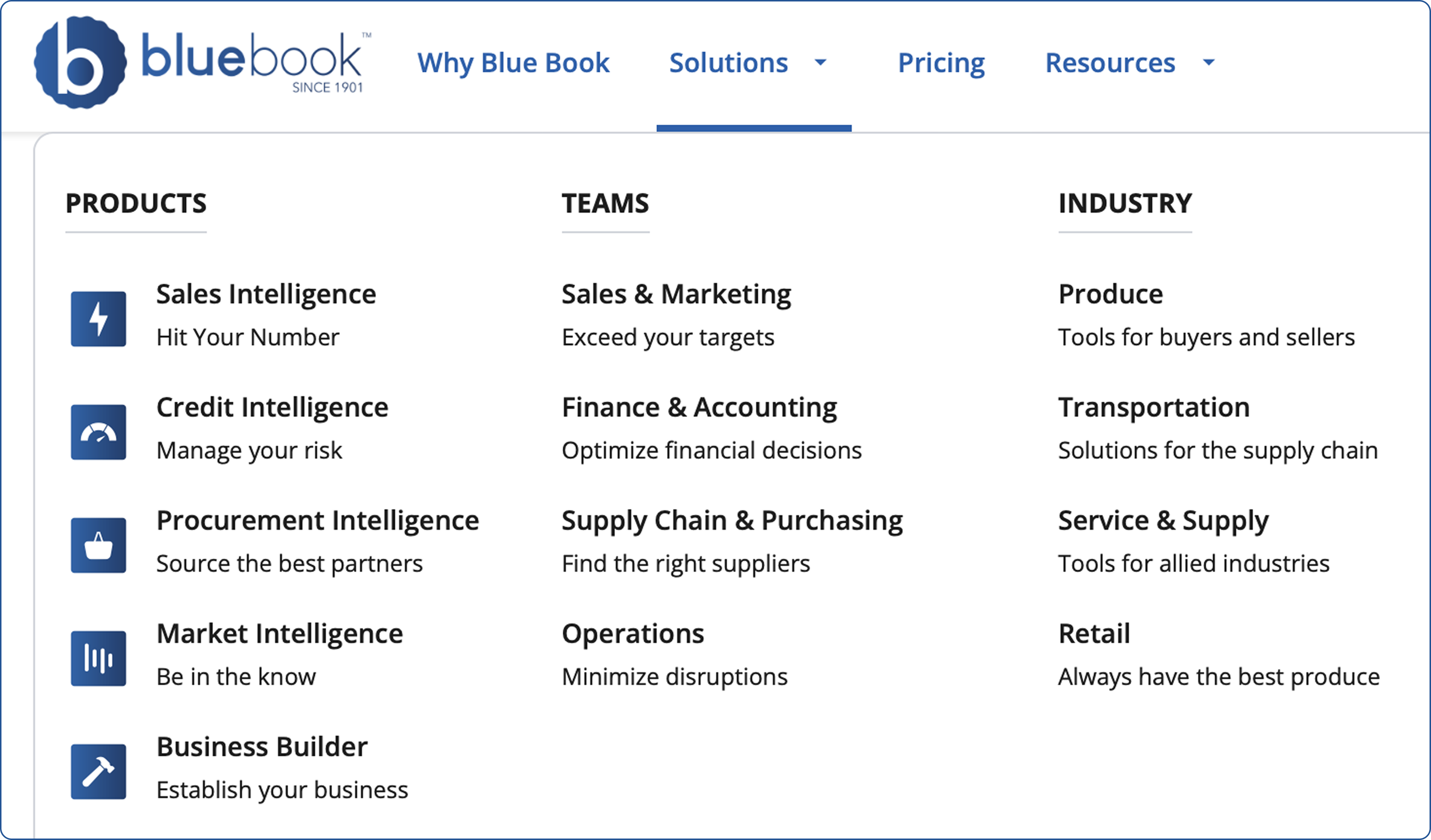
A 3-dimensional user-centric taxonomy.

To serve a buyer pool that spans roles, functions, and industries, I built three entry dimensions — each mapping to a question the visitor was actually asking.

  • DIM 01
    Functional Verticals — "What do I do?" Credit, Sales, Procurement, Market & Business Intelligence.
  • DIM 02
    Persona Archetypes — "Who am I at work?" Sales & Marketing, Finance, Supply Chain, Operations.
  • DIM 03
    Industry Types — "Where do I operate?" Produce, Transportation, Service & Supply, Retail.
The verticalized landing page ecosystem - PRODUCTS / TEAMS / INDUSTRY mega-menu.

A funnel that self-selects, contextualizes, and converts.

OLD FUNNEL

Homepage → CTA to login → drop-off.

Generic copy. No personalization. The visitor had to figure out what Blue Book meant for them — in five seconds, before they bounced.

NEW FUNNEL · 3 STAGES

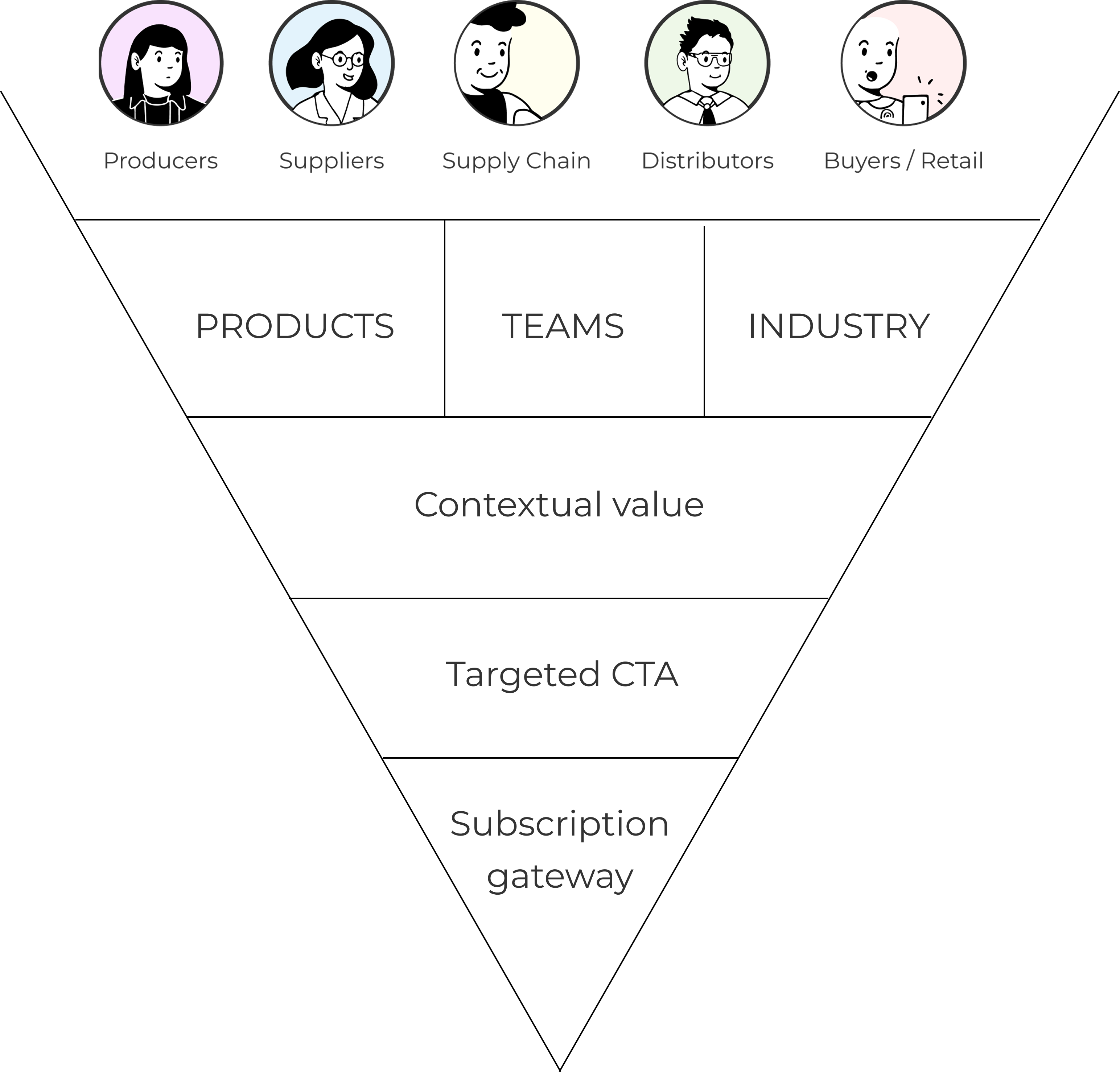
Self-selection → contextual value → targeted CTA.

"I'm in Transportation""Credit intelligence built for trucking companies""Get your transportation credit score" instead of generic "Join now."

Inverted funnel diagram showing how various users can self-select
Inverted funnel diagram showing how various users can self-select into the platform: PRODUCTS · TEAMS · INDUSTRY → contextual value → targeted CTA → subscription gateway.

Case Study 2 — Headline Outcomes.

$420K+
Sales in first 3 months
Up from a previously zero-conversion site.
169
Paying members
From 842 weekly visitors and no analytics.
20K+
Articles migrated
Without losing SEO. Web performance 3×.
CASE STUDY 3 · PROPOSED · WHAT'S NEXT

From the rating you look up, to the AI agent that's watching for you.

THE PROPOSAL

I modernized the app. I rebuilt the funnel. The next chapter is making the platform itself intelligent — and turning Blue Book's 124-year proprietary trust graph into something no AI tool on its own can replicate.

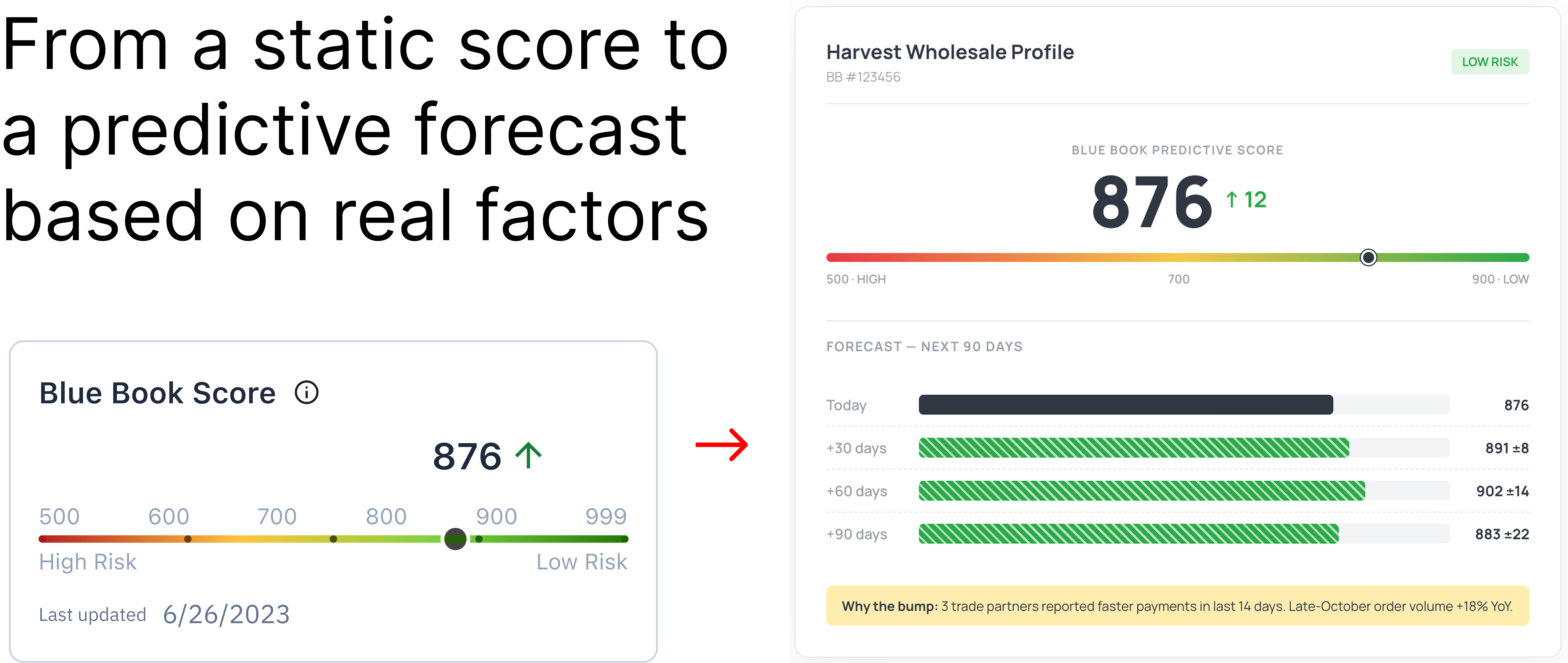
Concept mockup of the AI vision
Concept mockup of the AI vision — predictive score with forecast bands, or the Sentinel daily briefing card. A single hero shot that signals "this is where it could go."

Data is the moat. AI is the runtime.

For 124 years Blue Book has been a reference book — the trusted directory you look up to make a decision. In that century the company has accumulated something no AI tool on its own can replicate: a proprietary graph of produce industry trust signals.

The AI opportunity isn't to bolt a chatbot onto the side. It's to flip the model — from a reference book you consult to a runtime that runs for you.

Four areas of AI focus — same frame I used in Case 1.

  • 01 · PREDICT
    Reimagine the Score. Real-time, predictive (30/60/90-day outlook), explained in plain English, scenario-modeled.
  • 02 · WATCH
    Always-on intelligence. Specialized agents read PACA filings, court records, news, weather, payment anomalies — alert unprompted.
  • 03 · CONNECT
    The Produce Trust Graph. Every company, transaction, dispute, news event as connected nodes. The proprietary moat.
  • 04 · ASSIST
    Vertical copilots. Domain-tuned AI for the three roles that actually buy Blue Book — credit, sales, PACA recovery.

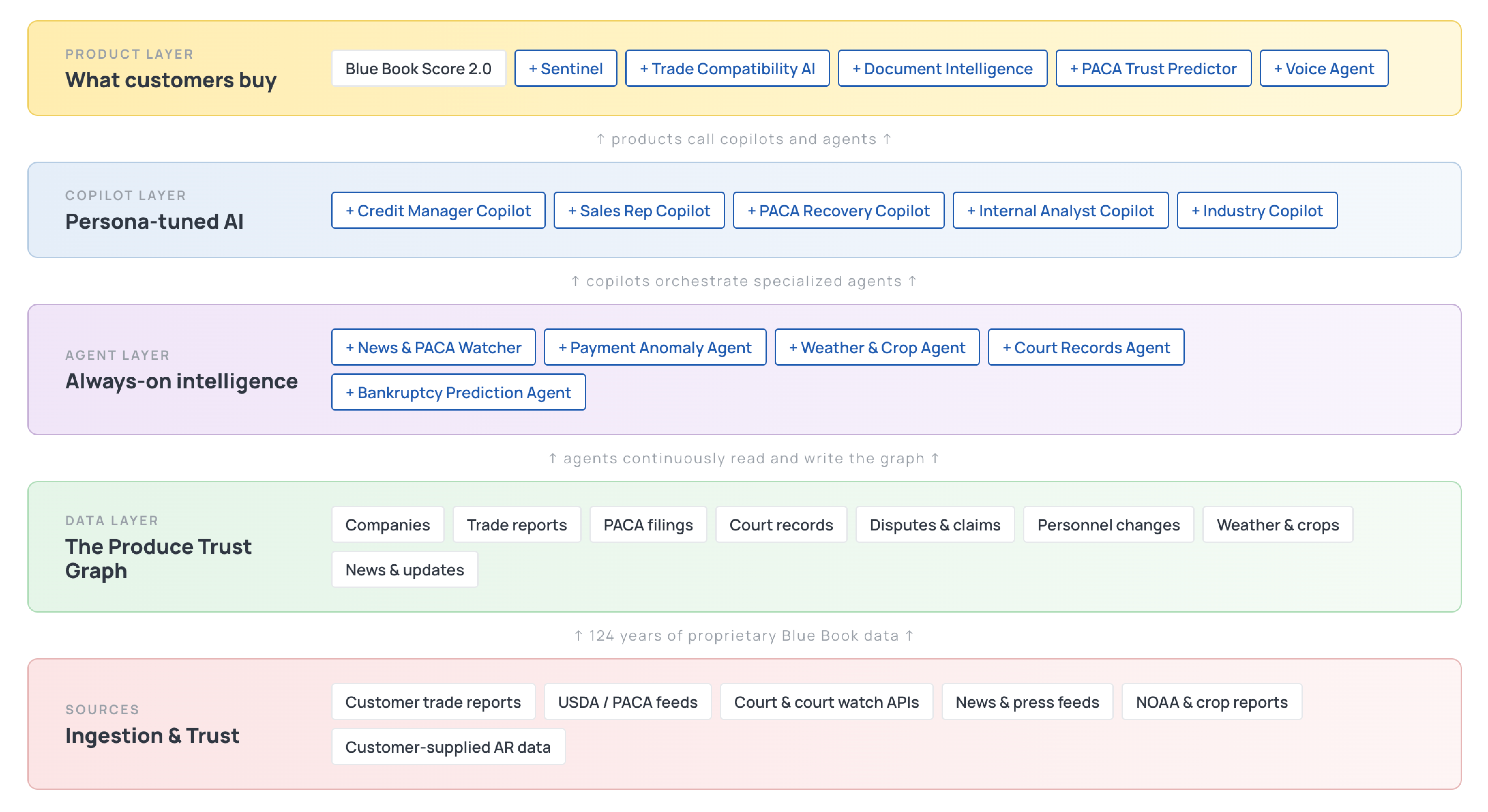
How the AI layer connects?
Everything reads the graph.

The Produce Trust Graph
The architectural principle is hub-and-spoke. The Produce Trust Graph is the single source of truth. Every agent, every copilot, every product reads from it. New products plug in without rebuilding the foundation.

AI isn't just a feature — it's how Blue Book runs.

The customer-facing AI grows revenue. The internal AI expands margin. You need both.

  • INTERNAL
    Ratings analyst copilot. Drafts credit assessments from trade reports. Analyst reviews. 3–5× throughput.
  • INTERNAL
    Support agent on call. Resolves tier-1 tickets autonomously. Escalates with context.
  • INTERNAL
    Newsroom copilot. Drafts industry news. Editors curate. Triples publishing velocity.
  • INTERNAL
    Sales rep onboarding. New reps productive in 2 weeks instead of 8.
THE DEFENSIBILITY ARGUMENT

"Anyone can build an AI tool. Almost no one has 124 years of proprietary produce industry data to make it useful."

REFLECTIONS

What I'd carry forward.

NEXT CASE STUDY →

VTS — Six disconnected products into one CRE operating system.

VIEW CASE STUDY →